
UPDATED 6 October 2026 — This article now includes a series from Czech Television’s travel programme Objektiv, covering our members’ journey through Kyrgyzstan described below.
Kyrgyzstan is a Central Asian country over which several powers are competing at once. Traditionally, there is Russia, which includes the country in its military and political alliance, the CSTO (Collective Security Treaty Organization, also known as the Tashkent Pact), and in the CIS (Commonwealth of Independent States) trading bloc. Then there is China, which shares a border with Kyrgyzstan and has its sights on the Silk Road countries. Turkey is another contender, with close linguistic and religious ties: both languages belong to the Turkic family. I discovered just how similar they are when I tried to show off my basic Kyrgyz and was mistaken for a Turk — probably because of my accent.

Kyrgyzstan is experiencing a boom not just in construction but in culture and, among other things, travel. For visitors, the good news is the “more than reasonable” prices, strongly shaped by intense competition, much as in China. There is no point in bringing tents, food and so on with you: everything is available locally for a third of the prices we are used to, even in popular destinations. Bring US dollars or euros and you will feel rich. Kyrgyzstan is a country of migrant workers who send money home from Kazakhstan, Russia and Europe, so currency exchanges are probably the most common businesses you will see. Some, particularly in Bishkek, are open around the clock.
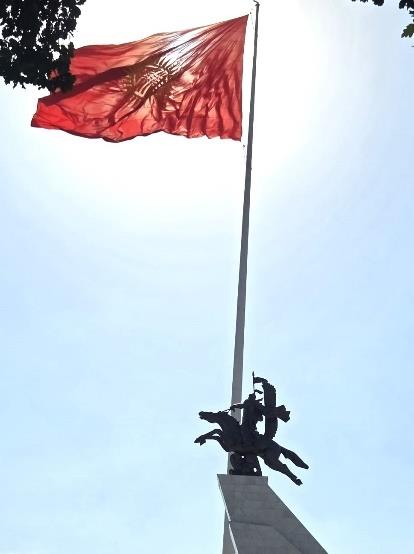
Kyrgyzstan’s magic number is 40 — “kyrk” in Kyrgyz — and it appears everywhere: in the centre of the yurt, in the roof opening known as the tunduk, on the national flag as forty rays of sunshine, everywhere you look. The magic forty refers to the forty united clans of the national heroic epic Manas. The Persian “stan” means a place, so, loosely translated, this is the land of forty clans. And there is strength in unity, after all.
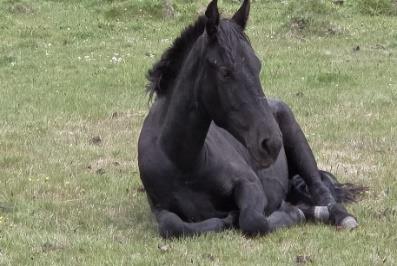
That is how Kyrgyzstan came into being: a land of nomads, herds of horses and kumis (known as “kymys” in Kyrgyz), a country that honours ancestral traditions and family. Arrive with that understanding and you will feel very welcome, especially if they see you as a venerable elder. Suddenly, you discover that the number representing your age can be a passport into their world. Unsurprisingly, the question I was asked most often was how old I was; after a while, I could answer it in fluent Kyrgyz. I suppose they could not understand why such a respected old man as myself was getting up to all this nonsense, bounding about like a chamois on and off the trails instead of simply pondering life and dispensing wisdom. Though I would have enjoyed that too.
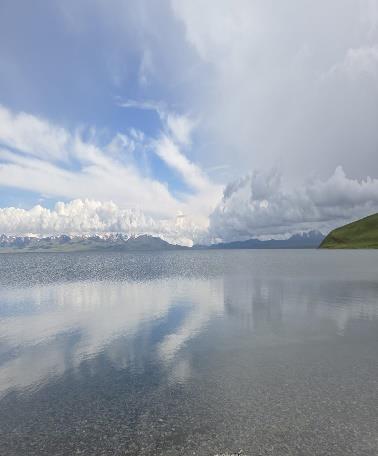
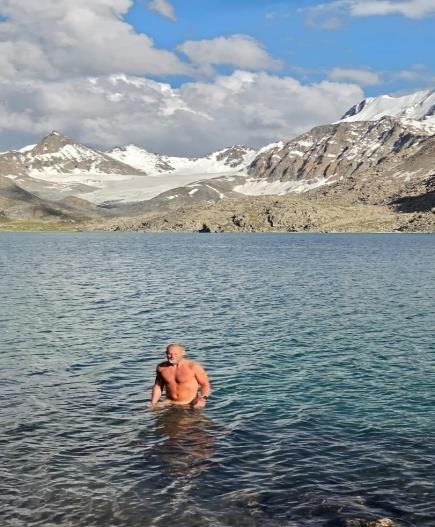
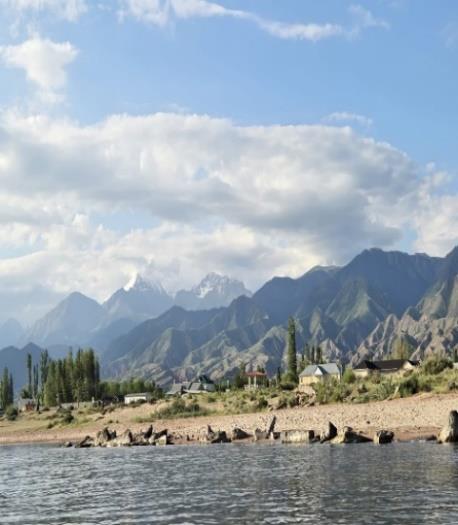
Kyrgyzstan is not only a land of nomads but unquestionably one of green mountains and majestic peaks, of icy lakes such as Son-Kul (3,016 metres above sea level, 22 metres deep, water at 8–9 °C) and Ala-Kul (3,532 metres above sea level, 70 metres deep, water at 4–5 °C). Above all, there is the Kyrgyz “sea”, as the locals call the warmer Lake Issyk-Kul. “Issyk” actually means hot in Kyrgyz, though I would not go that far: the lake was around 18 °C, probably about as warm as it gets near the shore. Matěj and I did not venture farther out. It is the world’s thirtieth-largest lake. If any of you fancy swimming across it, bear in mind that it is an impressive 182 kilometres long, but only 58 kilometres wide from north to south. Surely that might be manageable? As a bonus, in favourable conditions you can see the mountains on the opposite shore across those 58 kilometres. It is uplifting to know that you are swimming at roughly the altitude of the highest Czech mountain — 1,609 metres above sea level — with the lake more than 600 metres deep beneath you in places, and slightly salty water too.
Matěj and I can confirm that we really did try all three lakes, as proper cold-water swimmers should. At Ala-Kul, I even brought on a proper bout of shivering: when we went to a yurt for dinner, I shook half my soup over myself. I was still shivering in my sleeping bag. In the morning, however, I spent a full minute in icy Ala-Kul and was “ready to go”.
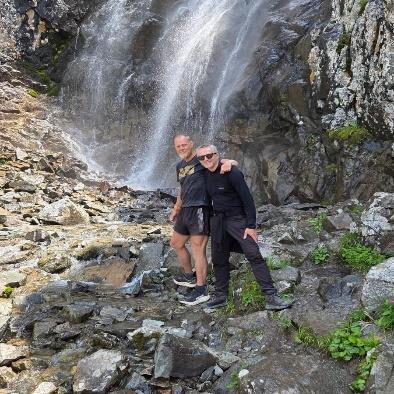
If any of you would like to visit this friendly country, do not put it off. It is looking forward to welcoming tourists and has plenty to offer; supply still far exceeds demand, though that may not last much longer… Kyrgyzstan, dzhakshy kalynyz — we bid you farewell…
Roman Hujer and Matěj Červený, I. PKO. If you would like to learn more about Kyrgyzstan or are planning a trip, try contacting the Kyrgyz community in Czechia through Telegram. Search for “Кыргызы в Чехии”. Use “Kyrgyz”, never “Kirgiz”: the latter is considered disrespectful and associated with Soviet chauvinism.
https://www.ceskatelevize.cz/porady/1096911352-objektiv/4986-staty/1177-kyrgyzstan/
Photo gallery
Photos: Roman Hujer