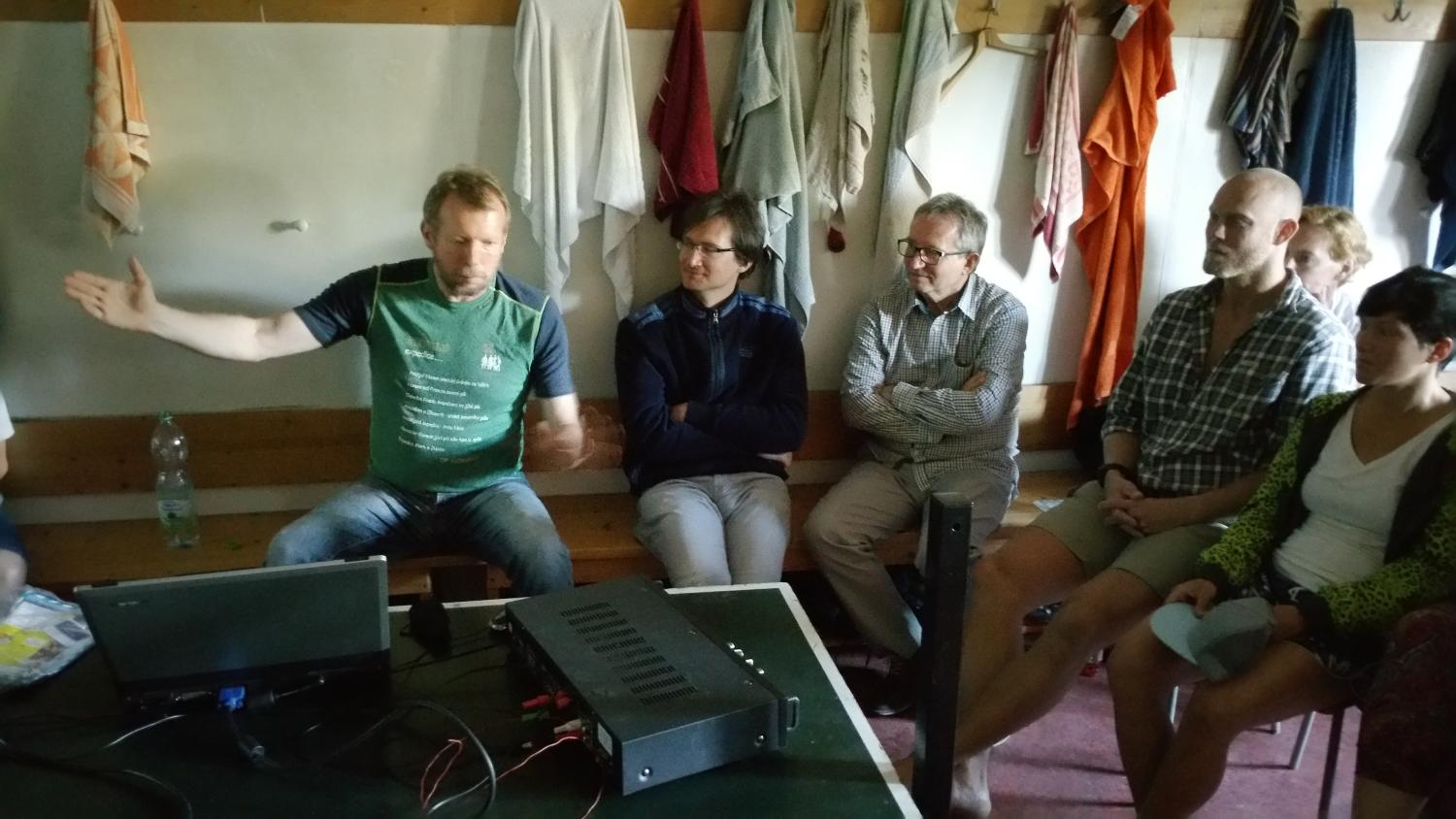
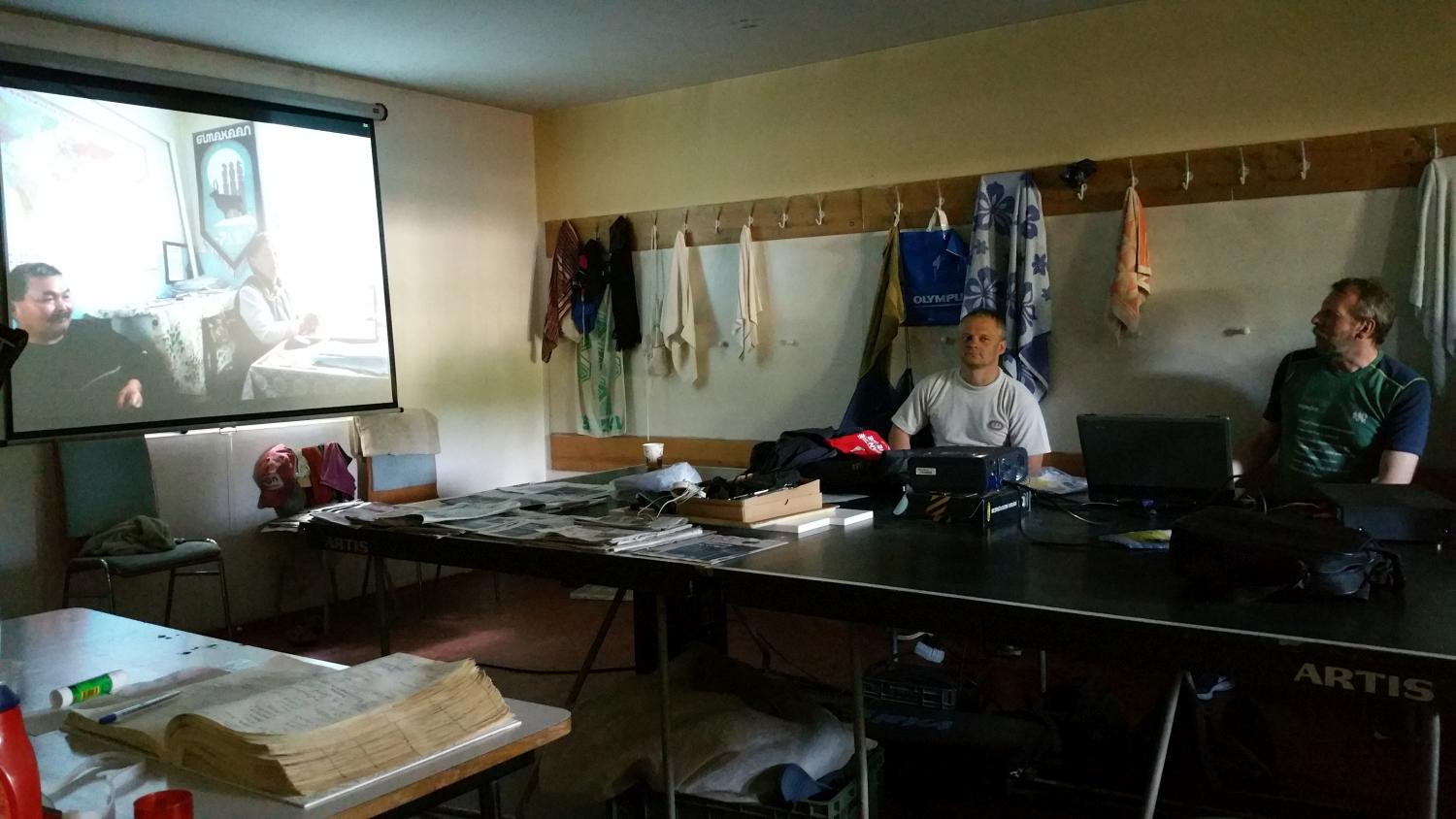
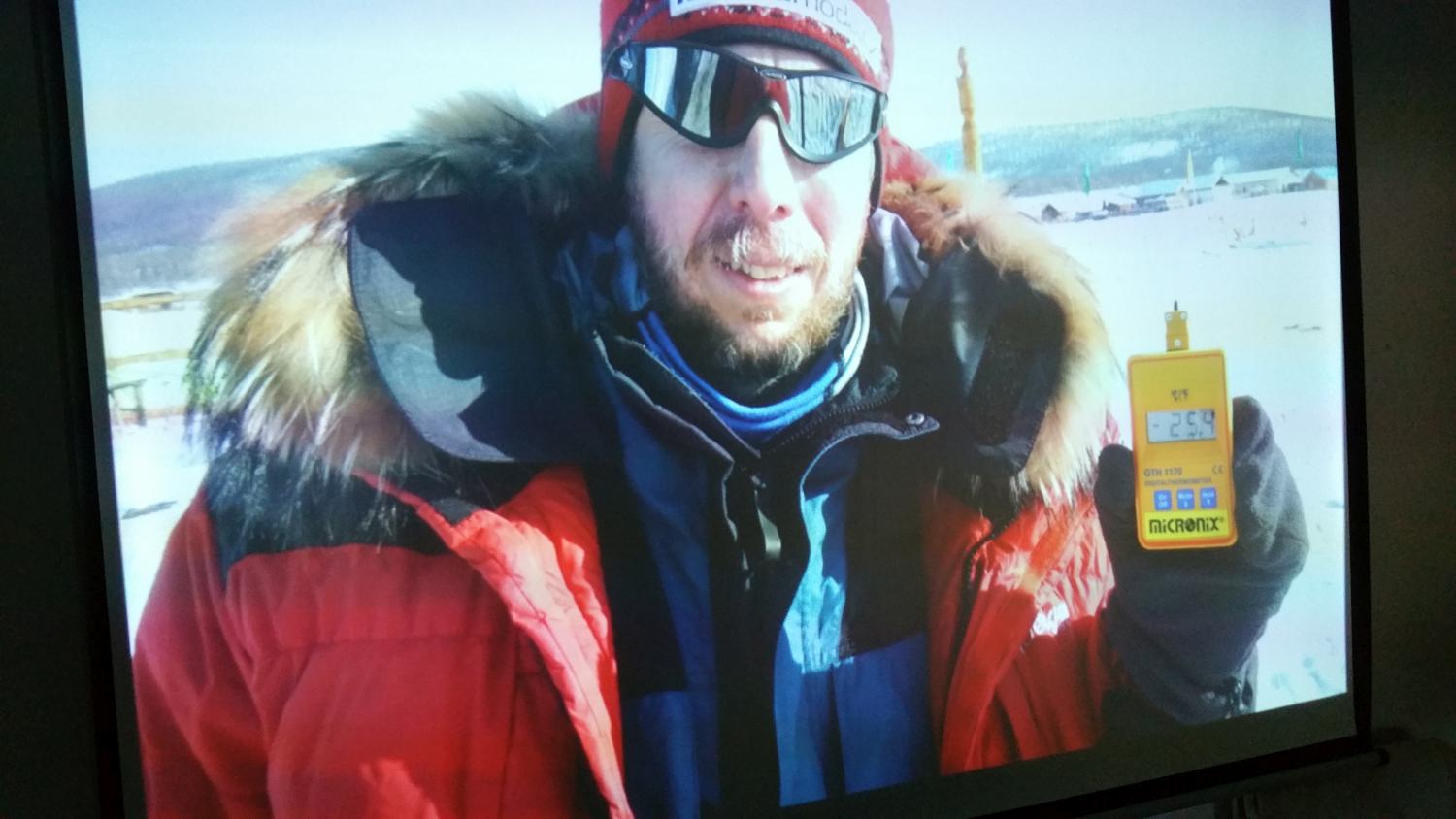
On Wednesday 15 June 2016, our I. PKO clubhouse hosted a fascinating talk by polar explorer Václav Sůra about his expedition to Oymyakon. Oymyakon is a settlement in Siberia known as the Pole of Cold, the coldest permanently inhabited place on Earth. The invitation to the talk opened with these words: “Taking a tent and a sledge and going camping in Siberia, at the Pole of Cold, seemed like a great idea to me.”
January lows here are around −65 °C. A minimum of −71.2 °C was recorded on 26 January 1926 and 18 February 2013. On 18 February 2013, the reading was actually even lower, at −71.5 °C, but the official report said −71.2 °C so that monuments displaying the record would not have to be changed for the sake of 0.3 °C. A typically Russian approach to the matter.
The Pole of Cold Festival and local people
Václav Sůra and Petr Horký set off in spring 2013 for the Pole of Cold Festival, held in the area. They travelled on skis, pulling sledges, and slept in sleeping bags in an unheated tent. Morning temperatures reached −50 °C several times. Their map was on loan from Miroslav Zikmund, complete with his handwritten notes. Apparently, little had changed in the region since his visit.
The nearest airport is in Yakutsk, about 1,000 km from the village of Oymyakon. The road between Oymyakon and Yakutsk was built under Stalin by prisoners from the gulags, or forced-labour camps. It is known as the “Road of Bones” because around 20,000 people were buried directly beneath it during construction. Russians drive specially adapted vehicles along this road. A mistake can cost you your life. People help one another here. Living in such harsh conditions gives them an extraordinary sense of perspective. Even serious situations are handled calmly and in their own way, with the motto: “Nothing is a problem.” They are accustomed to winter and remarkably resistant to the cold.
Local people tend to be short, with darker complexions, and resemble the Japanese. Japan is not so very far away. They live to an old age, helped by a healthy way of life. Their food is not full of additives as ours is. They eat reindeer and fish, and raise horses for meat. The rivers are clean.
In the settlement of Tomtor, the explorers attended the local Pole of Cold Festival, where residents bade farewell to winter. They saw Lady Winter and Father Frost in magnificent costumes on an ice throne. There was also a Miss Pole of Cold 2013 contest, a splendid celebration. Václav Sůra was invited to sit on the judging panel. Apparently, the contestant he found most beautiful was the one the locals liked least: they considered her appearance insufficiently “pure”, with European features.
Throughout the region, the pair were regarded as exotic visitors. Local people could not understand how they could survive in an unheated tent. They were welcomed everywhere and people posed for photographs with them. Their visit was entered in the local chronicle as something quite out of the ordinary. Just one page earlier, the chronicle recorded Adolf Hitler’s invasion of Russia. As the first foreigners to arrive on skis, they attracted considerable admiration.
Vašek Sůra shared all sorts of fascinating details. Temperatures in the region range from −70 °C in winter to +30 °C in summer. Life works differently in such extreme cold. Fruit sold at markets is frozen; meat is cut with a saw. Houses are heated from the local power station and tend to be overheated because there is no way to regulate the heating. There is no sewage system as we know it. Everything ends up in a single heap resembling a small pool in the backyard. Whatever is poured into it freezes immediately. In summer, before the heap thaws, a large truck comes along, breaks it free, loads it up and takes it away. The explorers also had an unforgettable experience at a public toilet on the first floor: everything fell onto a huge frozen heap on the ground floor, while you sat on two planks, afraid of falling into it.
People here practise and believe in shamanism. A local shaman woman welcomed the explorers and “prayed” earnestly for them. When she saw the equipment they were taking on the next stage of their journey, she prayed all the harder. Local people believe that wishes come true here and that the region has spiritual power. The explorers felt they experienced this themselves. For the return journey, they wished for a dog to protect them from the many wolves. They then met one that joined them, providing company and protection. Their wish really had come true.
Outdoor clothing and equipment
The explorers used both natural and synthetic materials. Vašek Sůra wore natural fabrics and used a down sleeping bag. Petr Horký used more synthetic fibres, including in his sleeping bag. They deliberately choose different materials so that they can test them in extreme conditions. Only the down sleeping bag stood up to −50 °C. At that temperature, the synthetic hollow-fibre bag cracked and gave up the ghost.
The explorers told us that they drank only enough to avoid sweating too much. At those temperatures, any sweat freezes immediately and becomes a problem. In practice, they were on the verge of dehydration. Vašek Sůra kept his fluid intake to exactly two litres a day. Naturally, they had also calculated their food supplies precisely. The dog they had unexpectedly taken along, after their hired guide refused to accompany them, ate into their daily rations a little. Those pleading eyes fixed on their food were hard to resist…
The explorers recommended applying lubricant gel to the body as protection against frostbite. Apparently, it works very well for that purpose too. But taking too much can lead to awkward explanations at airports about why you need such a quantity, especially if a woman is travelling with you ;-).
Cold-water training is fundamental preparation for expeditions
How does Václav Sůra prepare for the extreme cold on these expeditions? His body is accustomed to low temperatures through daily cold-water training. He takes a cold shower every day and swims in a local pond in both winter and summer. Cold exposure is a way of getting the body used to low temperatures and helping it adapt.
Press and television coverage
For anyone interested in the subject, there are many articles about the expedition online. Here are some of the most interesting:
- Czech polar explorers head for the world’s coldest region — cestovani.lidovky.cz,
- “We were seen as exotic visitors,” say explorers after their journey to the coldest place — cestovani.lidovky.cz,
- What is it like sleeping in a tent at Oymyakon, the Pole of Cold? Two Czechs found out — cestovani.idnes.cz,
- At the Pole of Cold, watch your thoughts: wishes can become reality — raport.cz.
The last link is less formal and closer to the experiences Václav Sůra shared with us in person. His talk was lively, full of humour and genuinely interesting. Thank you!
Václav Sůra also recounted his experiences at the Pole of Cold in an interview for Czech Radio. Another interview well worth watching is Marek Eben talking to Václav Sůra on Na plovárně, made by Czech Television.
“Zachraň mě — RescueMe” T-shirts
At the end of the talk, Vašek Sůra introduced a project he is developing with emergency responders. He sells T-shirts called Zachraň mě — RescueMe. The front carries basic first-aid instructions for a layperson, including the steps of emergency resuscitation. Inside are essential details about the wearer, such as allergies and medication. The system is linked to emergency responders in the Czech Republic and can immediately provide information about the person’s health.
You can learn more about the project on Sama doma. For anyone taking part in more demanding or risky sports, a T-shirt like this could come in handy — and might even save their life.
Photo gallery by Tomáš Prokop